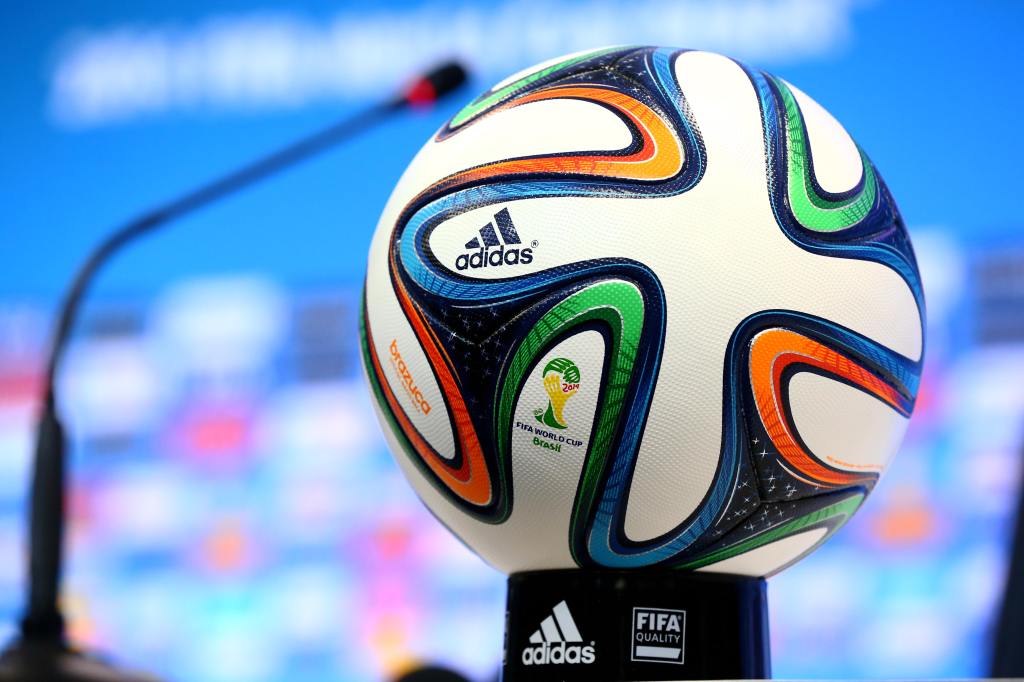
Like all World Cups a new ball has arrived for 2026.
The ball from Adidas is called TRIONDA, capitalised on the FIFA site.
The name Trionda can be translated from Spanish as “three waves”, and alongside other unique design features, celebrates the tourney’s three host countries, Canada, Mexicao and the USA. That’s a first.
Set the number three aside — there are four panels. The four-panel construction incorporates intentionally deep seams, said to create a surface that produces optimal in-flight stability.
As per other balls of its kind, the idea is to ensure sufficient and evenly distributed drag as the ball travels through the air.
Adidas also worked on the feel. Up close there’s an embossed surface, a grip, designed to help players when striking or dribbling the ball in wet or humid conditions, according to FIFA.
It’s a nice looking product. But for those fans who have missed the progress of the World Cup ball, let me tell you it’s been a long journey to this point.
Adidas’ pursuit of the perfect sphere began simply to restrict water logging. That goal quickly became one of many.
The company quite literally took the Size 5 and ran with it, especially since FIFA’s blessing in 1970. Its innovation teams have acquitted themselves vigorously to the task, and their employers have had little reason for an alternative.
Take the entirely synthetic “Azteca” which landed in 1986: at that juncture, something changed. Let’s call it ‘technological advancement’, which supplanted the typical experience. This wasn’t necessarily a bad thing, but the ball definitely became smoother, lighter, faster and at times, dipped and turned differently. Adidas has ebbed and flowed in this regard.
I tip my hat to the company’s perseverance — it’s been an impressive long-term study in design. For example, in just 15 years, Adidas has gone from the infamous “Jubalani”, renowned for dipping on unsuspecting goalkeepers, to today’s Triondra, said to be much truer in flight.
The panels play a role, it seems. Jubalani was thermally bonded together with just eight panels, six fewer than the Questra ball of ‘1994, and 24 fewer than the traditional 32 of yesteryear. Despite the ongoing shift to even fewer pieces, Trionda’s four panels might prove the perfect balance.
I say this as it looks to have a much tighter flight, staying more on the line of the intended target. Check out some videos and reviews online and you’ll see that it moves with a well-weighted and direct flight but also looks to create a bit of zip.
We should see some good goals this Cup!

 The Soccer Pitch Is Green